
Seal materials
EPDM, FKM or NBR? Choosing a valve O-ring
The process fluid in a valve stays at 70 °C. A cleaning cycle reaches 130 °C. The cleaning cycle exceeds the listed upper temperature for two of the three SPCV seal options.
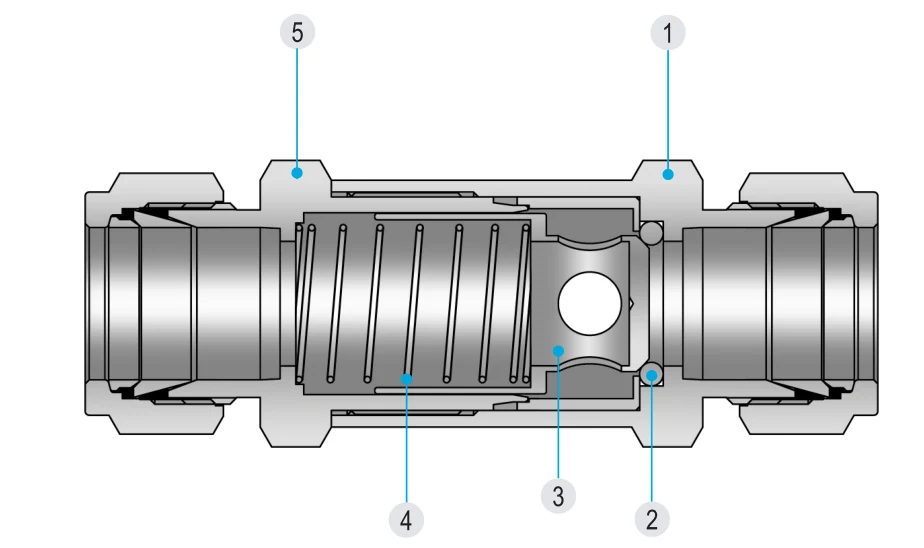
Choose against every fluid and temperature the seal sees, including cleaners and start-up conditions. Then check the compound offered in the actual valve. BMT lists 121 °C as the SPCV upper limit for both EPDM and NBR. The standard fluorocarbon passes this temperature screen. Its chemical compatibility and the complete valve rating still need checking.
Media and material
Screen the polymer, then identify the compound
An O-ring touches the fluid even when most of the valve is stainless steel. A seal can swell, harden or lose sealing force while the body remains sound. Start with the fluid trade name and composition, concentration, temperature and duration. Separate the process fluid from flushes, lubricants and cleaning agents.

Parker describes these trends by polymer family. Different compounds in one family can behave differently. For a water/glycol coolant, identify the glycol concentration and inhibitors. “Hydraulic fluid” can describe either a mineral-oil fluid or a phosphate ester, which can lead to different seal choices.
| Seal family | A useful starting point | Condition to investigate |
|---|---|---|
| EPDM | Water and certain glycol-based fluids | Mineral-oil exposure |
| FKM | Many mineral oils and fuels | Hot water, steam or polar solvents |
| NBR (Buna-N) | Many petroleum oils and hydraulic fluids | Heat, ozone and the additive package |
Worked selection
One valve, two operating conditions
In BMT’s SPCV series, the standard seal is listed as Viton (fluorocarbon). The ordering table uses E for EPDM and N for NBR. The SPCV material table lists −57 to 121 °C for EPDM, −23 to 121 °C for NBR and −23 to 191 °C for the standard fluorocarbon seal.
What the 130 °C wash establishes
At 130 °C the wash is 9 °C above the published maximum for both SPCV EPDM and NBR. The standard fluorocarbon range includes 130 °C. Its suitability still depends on the cleaner, its concentration and whether the seal sees hot water, steam or another medium.
Why the series name belongs on the record
BMT lists a different ethylene-propylene temperature range for SHCV. Substituting the SHCV figure for SPCV would change the result incorrectly. Record series, seal option, media in sequence and the most demanding pressure–temperature combination.
SPCV at the 130 °C cleaning temperature
- EPDM · E
- Above range
- NBR · N
- Above range
- FKM · standard
- Verify cleaner