
Valve sealing
Valve sealing design
Seat, stem packing, body gasket or O-ring? Locate the leakage path first, then select the seal geometry, material and evidence for that job.
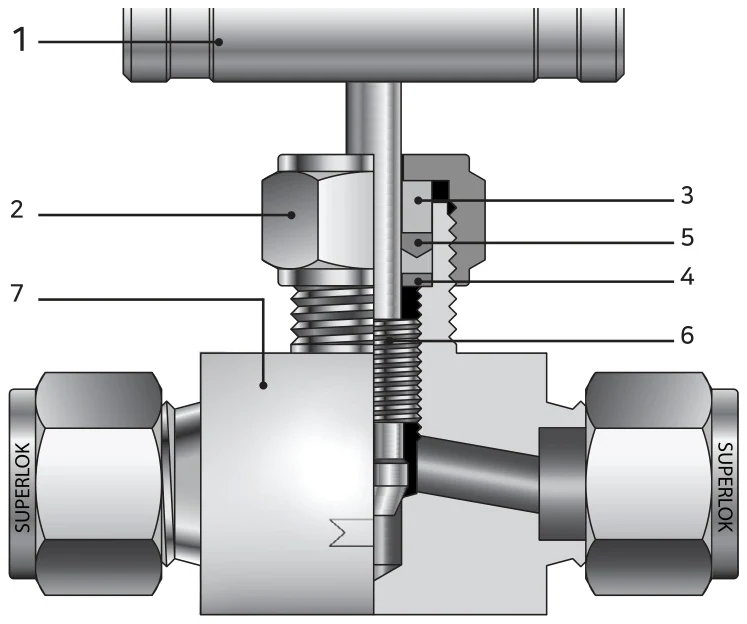
Start with the destination of a leak. Fluid can pass through the closed seat, out along the moving stem or out through a static joint. Each points to a different design decision.
Leakage paths
Which surface needs to seal?
A valve that isolates perfectly can still leak to atmosphere. A pressure-tight valve body can enclose a worn seat. Identify where fluid is allowed to travel and where the boundary has to hold in each operating mode.
| Interface | Demand on the seal | Useful specification |
|---|---|---|
| Seat or tip against its mating surface | Holds a differential when closed. Load direction, surface damage and particles can affect closure. | Name the shut-off direction, medium, differential, temperature and permitted leakage rate. |
| Stem through its packing or stem seal | Maintains an external boundary while the stem rotates or travels. Friction, stem finish and thermal cycling matter. | Specify movement, cycle count or duty, external leakage criterion and allowable operating force or torque. |
| Static body or bonnet joint | Retains compression between stationary parts as pressure and temperature change. The joint and sealing faces control the load. | Identify the joint design and approved gasket or O-ring, service temperature and external tightness requirement. |
An O-ring describes a shape. Depending on the design it can seal a fixed joint, move with a piston or form part of a poppet seat. Use the sectional drawing and the item number to say which one you mean.
Geometry & materials
Why the compound name is only a start
Two nominally identical polymer families can differ in formulation, hardness, chemical response and recovery. The groove, clearance, pressure direction and temperature decide what the chosen compound must actually withstand.
| Condition | What to check |
|---|---|
| Gas at pressure, followed by a rapid pressure reduction | Gas absorbed into some elastomers can expand and damage them internally during decompression. Check the actual compound, gas composition, pressure cycle and any required rapid-gas-decompression qualification. |
| A moving seal or cycling stem | Balance sealing contact against friction, wear and heat. Check the finish and motion of the mating part, operating frequency, packing arrangement and available actuator margin. |
| A static joint heated and cooled repeatedly | Check whether the elastomer can recover contact as the joint moves. For a gasketed joint, verify gasket construction and retained sealing load within the manufacturer’s design. |
| Fluid chemistry changes during cleaning or downtime | List all media, concentrations and temperatures. A compound chosen for dry gas may also see compressor oil, condensate or a cleaning fluid. Screen each exposure and then verify the actual compound. |
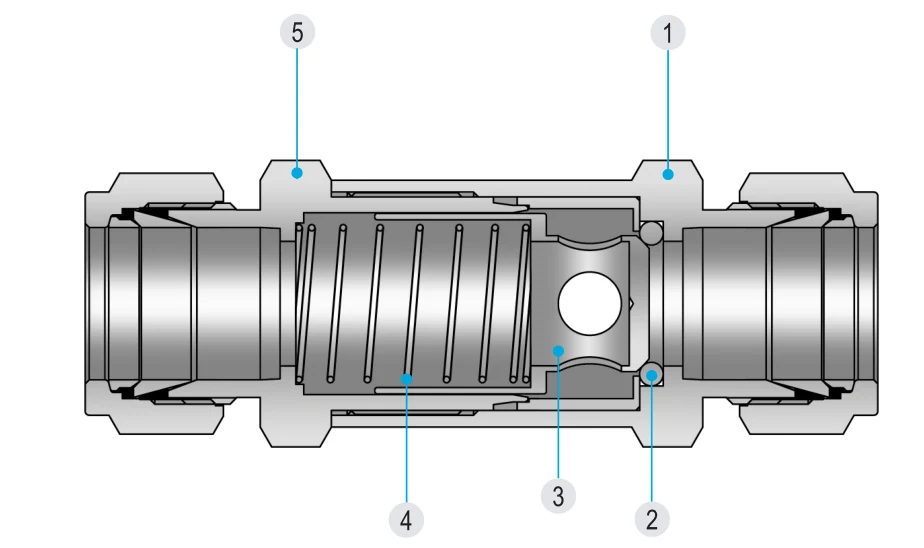
Where geometry changes the question
The SPCV parts list identifies a wetted O-ring, poppet and spring. In this valve check the soft seal together with opening and resealing behaviour. A change of elastomer alone leaves the spring setting and poppet guidance untouched.
Evidence & diagnosis
Specify a leak test that answers the question
Consider a methanol isolation valve that must close tightly and limit releases around the stem during repeated operation. These are two acceptance criteria. A chart can screen the compound for methanol. The order must also specify a permitted rate through the closed seat and a separate external leakage criterion at the stem.
An illustrative valve data sheet
- Internal shut-off
- Agreed seat-leakage criterion, test fluid, differential and direction, temperature and the exact valve configuration covered.
- External stem and body leakage
- Required external tightness or applicable fugitive-emission class, test medium, temperature and cycles. Record whether type qualification and production acceptance are required.
- Packing and static joints
- Compound or exact packing construction, item number, permitted replacements and service limits. Check compatibility in the operating and cleaning media.
- Evidence to retain
- Approved sectional drawing, materials list, relevant qualification reports, production records as specified and the replacement-kit revision.
Which standard addresses which result?
ISO 5208 covers pressure testing of metallic valves, including closure tightness within its scope. ISO 15848-1 addresses type qualification for external fugitive emissions. Part 2 covers production acceptance testing. State which leakage path, temperature, test medium and acceptance class the report must cover.
What a maintenance report should say
“Process fluid is passing the closed isolation seat” and “external leakage appears where the stem exits the gland” lead to different investigations. Record the location, fluid, pressure, temperature and valve position before selecting replacement parts.